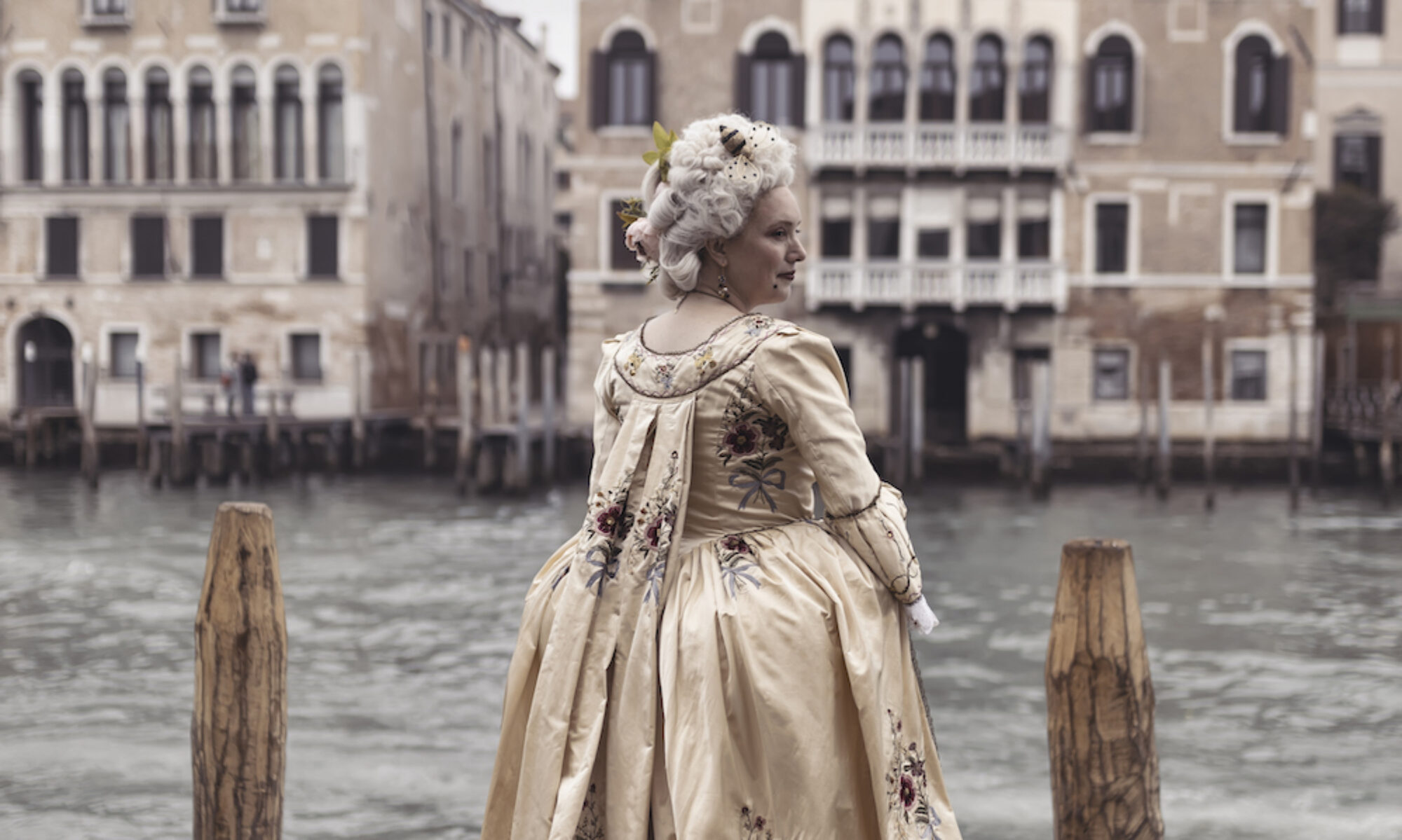
So I’ve got good news and bad news. The good? There are SO MANY museums that are putting their costume collections online — since my last update to the Real Women’s Clothing guide, there’s been the Metropolitan Museum of Art, Colonial Williamsburg, and Centre de Documentació i Museu Tèxtil de Terrassa, among I’m sure many others. The bad? There’s just no way I can keep up with adding and maintaining that many individual links. Seriously — run some searches in some of these new databases, there are hundreds if not thousands of individual items that I would need to add/maintain. Given that the last real update to the Real Women’s Clothing guide was in November 2008, I think it’s time to give up the ghost.
Instead, I have created a directory of Digital Collections of Extant Costumes, which includes both collection databases and static webpages with images of historic costume. This will be much more easily updated, and I can now include museums/collections that don’t include women, or go outside of the date range, of the previous Real Women’s Clothing guide. I tried to include searching instructions where I thought they would be needed, especially with non-English language sites. If you know of any museums that I’ve missed, please let me know!
I will leave the old version of the Real Women’s Clothing guide up, as I know many people find it useful… but I won’t be updating it anymore. (I’ll add redirects off that site to the new directory very soon).
And a fair offer, as I always said I would do this: if there is someone who is CRAZY enough to want to take over updating/adding to the Real Women’s Clothing guide in its previous incarnation on your own website, I will happily pass that on to you — but we should talk so you get an idea of how much work you’re signing up for!
As previously mentioned, I’ll be taking the Burnley & Trowbridge brunswick workshop in May. Of course, I had to immediately scour my sources to find information about this garment, which until about 2 days ago was a relative mystery to me!
Aileen Ribeiro, in Dress in Eighteenth-Century Europe, writes that a brunswick or “German Habit” was, “A long-sleeved version of the sack, usually three-quarter-length and with a high neck and a buttoned, unstiffened bodice…. widely worn in Germany in the middle of the century” (146). Colonial Williamsburg’s glossary of colonial lady’s clothing says a brunswick is, “A three-quarter length jacket worn with a petticoat, the Brunswick was an informal gown or a traveling gown. It had a high neck, unstiffened bodice that buttoned, long sleeves, and frequently had a sack back (loose pleats) and a hood”; while a jesuit is, “Similar to the Brunswick, but the skirt of the gown was full length.”
The style appears to have been most popular in the 1760s. They were cut like a sacque gown, with the full box pleats in back. The full length sleeves were made by connecting the usual elbow-length sleeves (complete with sleeve ruffles) to a separate lower sleeve. According to posts on the 18cwoman list, this was because they were made by mantua makers, who did not use the technique of a shaped long sleeve (used by tailor’s on men’s garments); the separate lower sleeve allowed the sleeve to fit the elbow. Ribeiro writes that while early sleeves had a break at the elbow with a ruffle, by the end of the 1760s that was replaced with a small ruched cuff (although it is unclear whether she means that the elbow ruffle was replaced, or whether that was dropped and the ruffle is now at the cuff) (146). According to the information provided to those of us taking the workshop, brunswicks were not worn over any skirt supports (ie side hoops or bumrolls), although I have found one image (below) of what is probably a jesuit worn over side hoops. It appears that most are high necked, although at least one of the confirmed brunswick images (Sophia Pelham) has a lower neckline; there are other possible brunswicks/jesuits with low necklines as well below.
Barbara Johnson’s Album includes two relevant fashion plates, one of each style. The brunswick has military-esque folded back revers with buttons. The jesuit is very similar, except for a longer length overskirt. Both have the usual petticoat ruffle and loopy-patterned ruches that you’d expect to see on a 1760s sack, as well as straight ruches along the overskirt openings. There is one swatch for a brunswick: “a Manchester Brunswick twelve yards” from 1772; the fabric is a small blue and white check, which reminds me of a modern gingham.
Here is a gallery of images of probable brunswicks or jesuits. Most of the fabrics appear to be silk taffeta or satin, although there is one cotton print.
Hogarth, before 1764 (1730s-50s?). Detail from a Study for a Family Portrait. Possible brunswick or jesuit? It’s hard to determine the skirt length.
Portrait of a Girl Holding a Spaniel, Roslin, 1740s or 1750s? Probably a jesuit, based on the length. Note that it’s worn over panniers! Sothebys
Nattier, 1750s. Louise-Elisabeth de France, Duchesse de Parme. This could be a brunswick or jesuit, based on the sleeves, although I don’t see a hood. Gogmsite
Liotard, 1757. Marie Justine Benoite Favart Duronceray. Again, no hood is visible.
Mme d’Epinay by Carmontelle, 1750s or 1760s? Jesuit? Musée Condé
Mme de Lancise by Carmontelle, 1750s or 1760s? Jesuit? Musée Condé
Liotard, 1762. Marie Elisabeth of Habsburg Lorraine. Brunswick or jesuit.
Greuze, 1763. The Broken Mirror. Brunswick? Note the long sleeve extension is missing. Wikimedia Commons
Reynolds, 1764. Sophia Pelham. Ribeiro’s Art of Dress quotes the Public Advertiser: “Mrs Pelham, whole length, in a flowered muslin Brunswick dress, feeding her poultry.”
1765-75 brunswick. The petticoat and lower sleeve extension are missing. Victoria & Albert Museum
You probably won’t be buying anything, but Christie’s is having an auction on Dec. 3, 2009 called Fashion Through the Ages, and the online listings have a lot of lovely, zoomable photos. I think I’m liking the macaroni jacket best, although this caraco is appealing to the butter churner in me…
Some of you may be interested in a new article in Renaissance Studies (2009, vol. 23 issue 1): “Clothing and a Florentine Style, 1550-1620.”
Here’s the abstract: “This article addresses the links between Renaissance clothing and identity, focusing on the reigns of the first Medici grand dukes, a period when the political and social make-up of the Florentine elite underwent profound changes. Drawing on a wide range of sources, from sumptuary legislation, court correspondence and family account books to tailors’ patterns, it examines different ways of thinking about and analysing dress styles. Taking the under-explored subject of male dress, it concentrates on two specific clothing types: the traditional full-length cloak, known as the lucco, worn by government office holders, and the liveries of the Medici courtiers. It concludes with the role played by local textile production, a vital aspect of Florentine culture as well as its economy. Although the Medici family’s efforts to shape the dress of its subjects were partially successful, certain fundamental elements of the city’s sartorial ethos resisted change.”
For anyone interested in 18th century costume research, particularly French sources, check out the amazing La Mesur d’Excellence. The Modes section includes scans (sometimes many pages, sometimes only a few) of some really important and rare sources. It’s worth clicking on the preview images, because sometimes the full “image” actually includes a couple of pages (not shown in the preview). What an amazing collection!