When it comes to costume/fashion history books, I am a sucker. Even though I work in a university library, I still need to own ALL THE BOOKS! With that in mind, here are some recently published and forthcoming books that I am excited about. (It feels like it’s been a while since there’s been a decent number of costume books to be excited about, so, yay!)
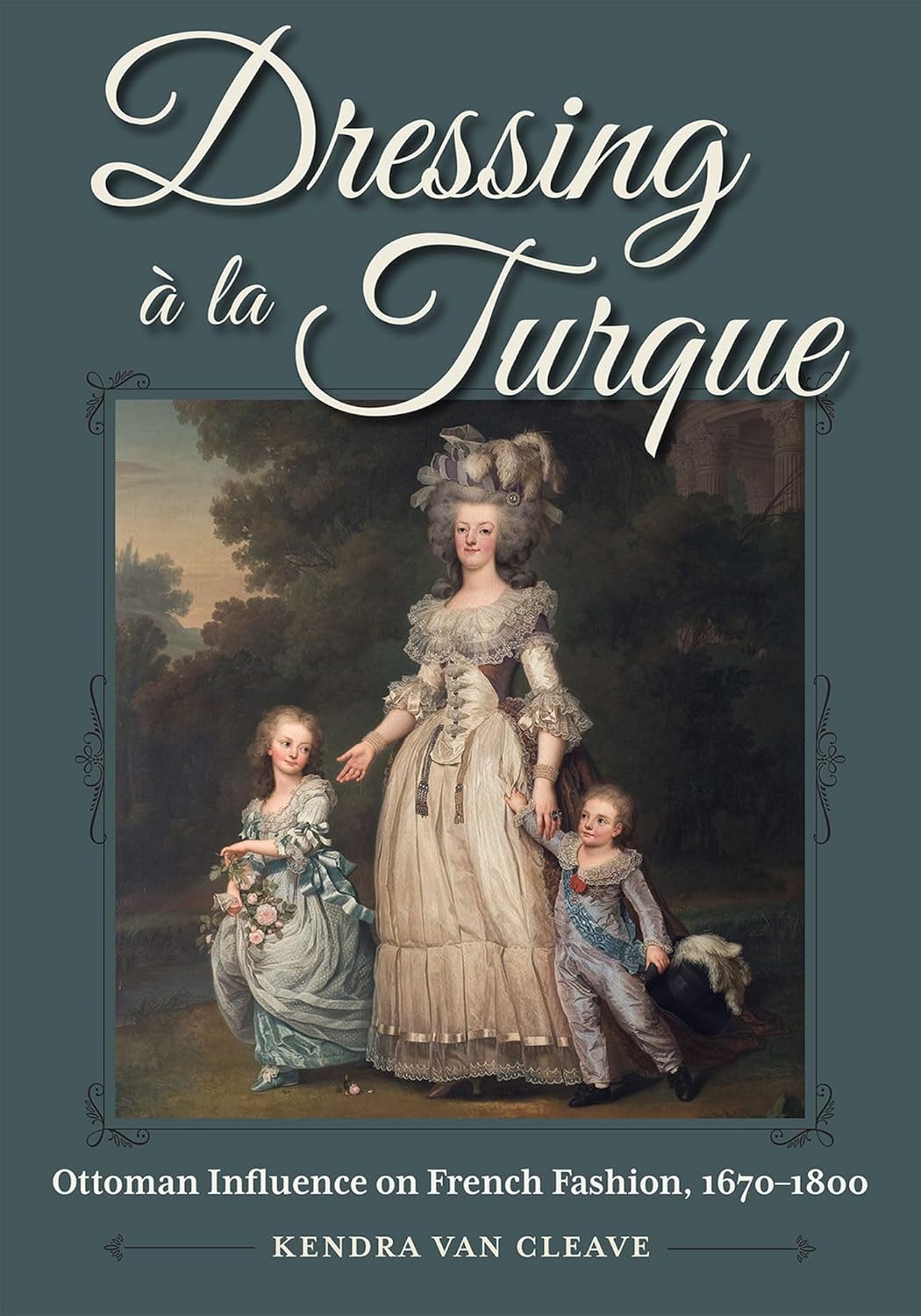
Fashion Prints in the Age of Louis XIV: Intepreting the Art of Elegance — I literally just purchased this one, and I can’t wait until it shows up. I’ve only dabbled in 17th century costume, but it forms a basis of the ongoing research I’ve been doing on Turkish influence on 18th century fashion, so I’m looking forward to both reading their analysis and hopefully seeing some fashion prints that are new to me. It was just published at the beginning of this month. From the book’s description,
“Between 1678 and 1710, Parisian presses printed hundreds of images of elegantly attired men and women dressed in the latest mode, and posed to display every detail of their clothing and accessories. Long used to illustrate dress of the period, these fashion prints have been taken at face value and used uncritically. Drawing on perspectives from art history, costume history, French literature, museum conservation and theatrical costuming, the essays in this volume explore what the prints represent and what they reveal about fashion and culture in the seventeenth century. With more than one hundred illustrations, Fashion Prints in the Age of Louis XIV constitutes not only an innovative analysis of fashion engravings, but also one of the most comprehensive collections of seventeenth-century fashion images available in print.”
Style and Satire: Fashion in Print 1777-1927 is from the Victoria & Albert Museum, which is all I need to know. Plus, as well know, satires and caricatures can be such great sources for fashion history — see, for example, my article on 18th century rumps! Also just released.
“From the sky-high coiffures of Marie Antoinette to Victorian hoop skirts, from the sheer gowns of Pride and Prejudice era to the flat-chested 1920s flapper, Style and Satire tells the story of European fashion and its most extreme trends through lavish fashion plates and the glorious satirical prints they inspired. Beautifully printed, hand-colored fashion plates first appeared in magazines and for sale individually in the late 18th century. At the same time (and often by the same artists), satirical prints gloried in the absurdities of fashion, presenting an alternative, often humorously exaggerated, vision of the fashionable ideal. Both forms were a product of the same print market, and both documented modern life. Lavishly illustrated, Style and Satire presents a witty and original history of fashion trends.”
Gilded New York: Design, Fashion, and Society — I’m going to NYC in late October, and this is one of the exhibitions I’m really excited to see. I went through a phase of reading about all of the Gilded Age heiresses who went to England (like Consuelo Vanderbilt), so I’ve got a soft spot for the whole late 19th century New York high society thang. I’ll definitely report on the exhibit once I’ve seen it!
“The Gilded Years of the late nineteenth century were a vital and glamorous era in New York City as families of great fortune sought to demonstrate their new position by building vast Fifth Avenue mansions filled with precious objects and important painting collections and hosting elaborate fetes and balls. This is the moment of Mrs. Astor’s “Four Hundred,” the rise of the Vanderbilts and Morgans, Maison Worth, Tiffany & Co., Duveen, and Allard. Concurrently these families became New York’s first cultural philanthropists, supporting the fledgling Metropolitan Museum of Art and the Metropolitan Opera, among many institutions founded during this period. A collaboration with the Museum of the City of New York, Gilded New York examines the social and cultural history of these years, focusing on interior design and decorative arts, fashion and jewelry, and the publications that were the progenitors of today’s shelter magazines.”
The House of Worth: Portrait of an Archive — I’d love to hear from anyone who has purchased this one. It sounds amazing — images from the House of Worth archive at the V&A, with details about designs and fabrics. However, I see in the reviews that most of the images are in black & white, which doesn’t sound as exciting. Has anyone seen this? What did you think?
“Legendary British-born designer Charles Frederick Worth (1825–1895), with enormous talent for design and promotion, built his fashion house into an empire during the last quarter of the 19th century—the first business of its kind with global reach. His company, through his heirs, endured until 1952, when his great-grandson retired. Profusely illustrated, this astonishing book explores Worth’s success in the realm of haute couture after 1890. Hundreds of photographs selected from the V&A’s unique archive of more than 7,000 official house records capture the Worth style and offer valuable insights into the daily routine at Maison Worth in Paris. Images and text tell the intriguing story of these creations, providing historical context and describing Worth’s international clientele of elegant women of wealth and power.”
Glasgow Museums: Seventeenth-Century Costumes has been on my wishlist for a while now, and at $22 I really should just buy it, because, 17th century! I am super excited that it sounds like they’re planning to publish more books about their costume collection. One reviewer clarifies that the book features mostly “Waistcoats, coifs, bags, hats, gloves” with a focus on “surface embellishments.”
“Rich silks embellished with needlework were used to create expensive, high quality garments, affordable only for the wealthy. Yet their very exclusivity, has meant that few items have lasted through the centuries, many having fallen victim to reuse and re-cycling as other garments and household items. Several rare and beautiful pieces do however survive in Glasgow Museums’ collections. This book is the first in the series of publications about Glasgow Museums’ European Costume collection. Designed to appeal to costume and embroidery enthusiasts and social historians alike, it features new photography and the fruits of recent research, revealing the intricate details of exquisite embroidery.”
The Impossible Wardrobe: Highlights from Three Centuries of French Fashion at the Galliera Museum. The Musee Galliera has a huge, amazing costume collection on the level of the V&A. However, they don’t show a permanent collection; they only do special exhibitions. So I’m really excited to see what gets featured in this book. I saw the Modes en Miroir exhibit (which was about 18th century fashion in France and the Netherlands), and it was really amazing. So I have high hopes! Note that this doesn’t come out until January 2015.
Fashion Victims: Dress at the Court of Louis XVI and Marie-Antoinette — Kimberly Chrisman-Campbell has published a number of scholarly articles on 18th century dress that are seriously fabulous, plus she’s contributed to a number of books and exhibitions (including LACMA’s Fashioning Fashion). Plus, most of my academic research is in late 18th century French fashion. So, I am THRILLED that she is coming out with this book. THRILLED. And I’m not happy about having to wait until April 2015 for it to come out!
“This engrossing book chronicles one of the most exciting, controversial, and extravagant periods in the history of fashion: the reign of Louis XVI and Marie-Antoinette in 18th-century France. Kimberly Chrisman-Campbell offers a carefully researched glimpse into the turbulent era’s sophisticated and largely female-dominated fashion industry, which produced courtly finery as well as promoted a thriving secondhand clothing market outside the royal circle. She discusses in depth the exceptionally imaginative and uninhibited styles of the period immediately before the French Revolution, and also explores fashion’s surprising influence on the course of the Revolution itself. The absorbing narrative demonstrates fashion’s crucial role as a visible and versatile medium for social commentary, and shows the glittering surface of 18th-century high society as well as its seedy underbelly. Fashion Victims presents a compelling anthology of trends, manners, and personalities from the era, accompanied by gorgeous fashion plates, portraits, and photographs of rare surviving garments. Drawing upon documentary evidence, previously unpublished archival sources, and new information about aristocrats, politicians, and celebrities, this book is an unmatched study of French fashion in the late 18th century, providing astonishing insight, a gripping story, and stylish inspiration.”