TV Review: Bomb Girls (2012 – present)

Starring Meg Tilly, Jodi Balfour, and Charlotte Hegele.  Costumes designed by Joanne Hansen.

Buy this and other costume films from Amazon and support this site

This is a Canadian TV series (set in Toronto, I believe?) about various women who work at a munitions factory during World War II… and it is complete soap opera, and I love it!  The lead character is Gladys, daughter of a wealthy family who wants to get involved in the war effort and rebel against her parents, so she gets a job at the factory.  There she meets many working class women, from Lorna (the older supervisor with a difficult home life, played by Meg Tilly) to Vera (the flightly girl who faces a big challenge) to Betty — the strong independent woman, who falls for sheltered Kate, running away from an abusive family.  The stories follow them into the factory and out as the war complicates their lives, does a beautiful job showing the many opportunities and challenges that the war caused for women, and has some excellently soap opera-esque storylines to keep you hooked.

Best of all, the costume designer did a BRILLIANT job.  Everything from the factory outfits to the street and dress-up wear, hair, makeup, etc. is appropriate to the period.  In particular, they either have a stock of vintage rayon prints or a source for making stunning reproductions, because the women wear dress after dress that makes you go, “WHOA, that is SUCH a 1940’s print!”

My review:  5 (out of 5)

Help Me Date Some Photos!

Late 19th/early 20th century is not my absolute forte, so I wonder if they are someone else’s!  I have some older family photos that I’d love help dating.  None of them have enough clues for me to figure them out on my own.

Mary Ridyard Daniels, born 1866, died after 1920. William Daniels, born 1850, died 1913.
Both were born and lived in England. They married in 1884.

Here’s where it gets tricky, because the rest are German/English circus performers

Simon Levy Blumenfeld, born 1828 in Germany, moved to England in the 1880s, died there in 1911. Wilhelmina Constance Blennow, born 1841 in Germany, moved to England in the 1880s, died there in 1915. The couple married about 1858. Performed throughout Western Europe.
Baptist Blumenfeld, born 1868 in Germany, died 1943 in New York. Performed throughout Western Europe and the United States.
Gertrude Daniels Blumenfeld, born 1884 in England, died 1944 in New York. Baptist's wife -- they married in 1910, she didn't start performing until after their marriage. Retired from performing in the 1920s.
Another shot of Gertrude.
The Six Salores: 1. Amy (aka Ruby) Simpson Blumenfeld (1886 England - 1963 US), wife of Paul Blumenfeld. 2. William Blumenfeld (1876 Germany - 1963 US). 3. Beatrice Daniels Blumenfeld (1889 England - 1983 US), wife of William. 4. Paul Blumenfeld (1874 Germany - 1963 US). 5. Gertrude Daniels Blumenfeld. 6. Baptist Blumenfeld. All three men were brothers; Beatrice and Gertrude were sisters. The act performed in England and the US from about 1910 through the 1920s.
Top row: Gertrude Daniels Blumenfeld, Beatrice Daniels Blumenfeld. In swing: Paul Blumenfeld. Laying across Paul: Baptist Blumenfeld. Hanging from Paul: William Blumenfeld. Again, must be between 1910 and the 1920s.

Can you spot any clues?

Powerhouse Museum Electronic Swatchbook

Thanks to Fran on the GBACGCostumers Yahoo group, I’ve discovered the Powerhouse Museum’s Electronic Swatchbook.  Swatchbooks were designed so that fabric manufacturers, agents and merchants could show samples of their fabrics.  The museum has scanned several from their collection from the 1830s through the 1920s.  What’s cool is you can not only browse by year but also by color.  The swatches themselves are scanned in high res and you can zoom in really closely.

A great resource for dating fabrics and identifying good reproductions!

Movie Review: The Help (2011)

Starring Emma Stone and Viola Davis.  Costumes designed by Sharen Davis.

Buy this and other costume films from Amazon and support this site

Okay, so no doubt you read/heard about this movie when it came out.  Strong performances from many of the cast members, a good quality film but definitely made for Oscars, some issues around the fact that it celebrates a fictional strong young white woman for telling the story of African Americans rather than celebrating real historical strong African-American women.

What I want to talk about is hair.  Specifically, lead character Skeeter’s hair.  Apparently in the book I have not read, Skeeter has curly, frizzy hair that is the bane of her existence (as it is so NOT the mid-1960s beauty ideal).  An article quotes Hair Department Head Camille Friend who says, “In the book, she has unruly hair, and it’s a pivotal story point, so we decided on a blonde, curly hair texture for her lace-front wig” (American Salon, July 2011).

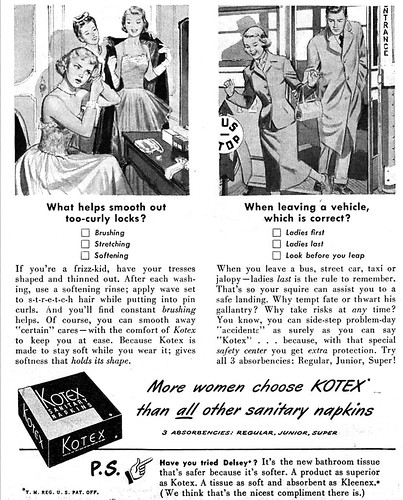
Okay kids.  In the mid-60s, you did NOT want curly hair.

... too curly locks?

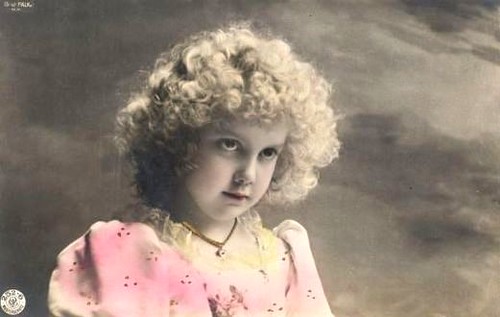
This was an era when they didn’t know how to deal with natural curl.  Artificial, styled curl?  Yes.  Natural curl?  Find ways to smooth it out via brushing, cutting, large rollers, you name it.  I can’t even find any images of women with naturally curly hair in this era.  If I could, it would look more like this:

Vintage Postcard ~ Curly Hair

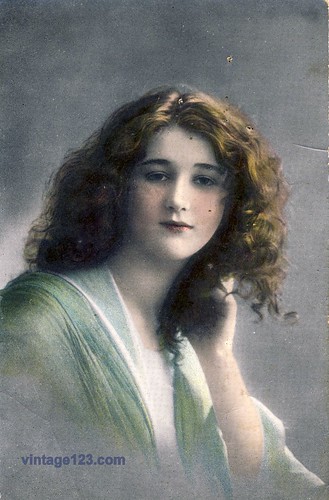
Or this:

Vintage Postcard

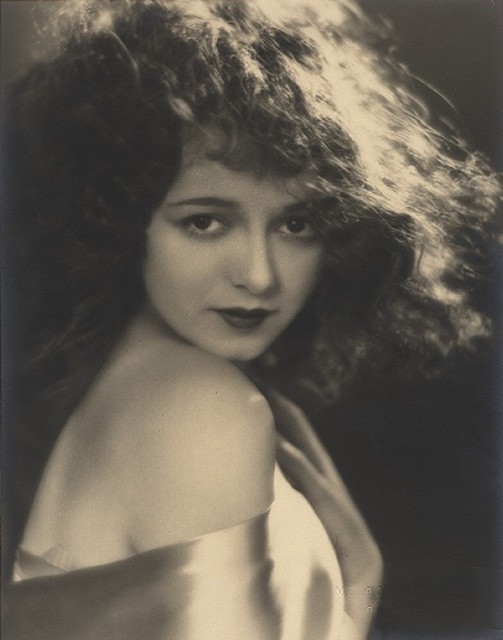
Or this:

Vintage Woman

It would NOT look like this:

Emma Stone as Skeeter in The Help

That is all.

My review:  3 (out of 5)

If you like this era, you might also want to check my 20th C. Costume Movie Reviews.  If you’re in the mood for better done mid-century, check out An Education (2009), Far From Heaven (2002), and Revolutionary Road (2008).