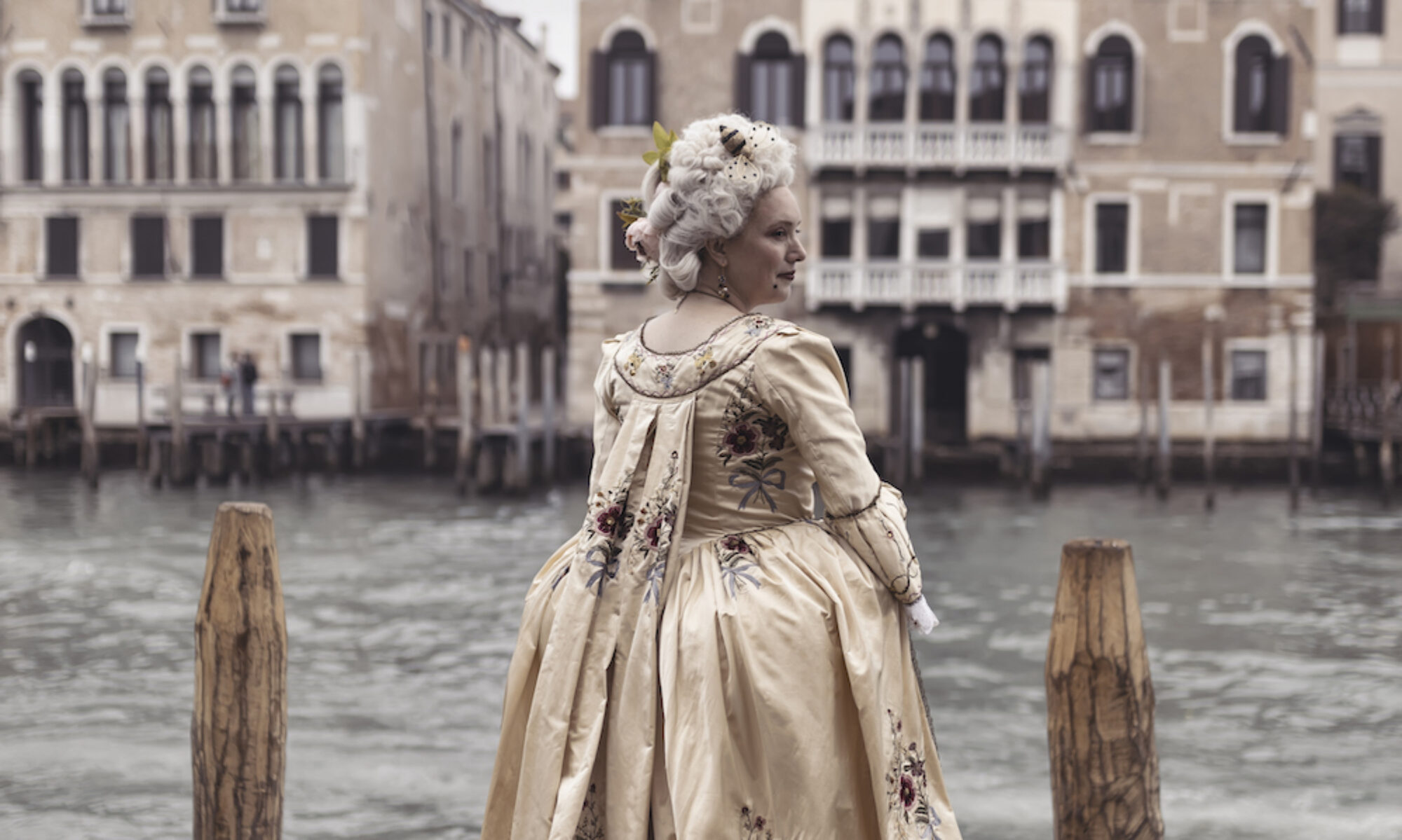
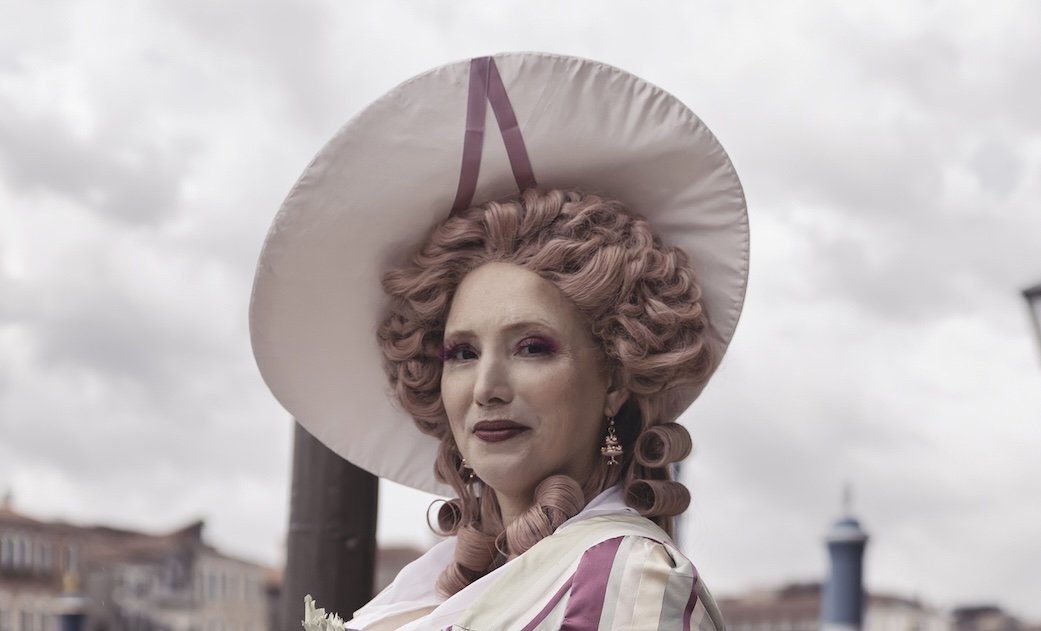
For years, I have been promising to teach online classes on 18th century wig styling. Well, I’ve finally gotten organized and created an online step-by-step tutorial for this specific style on Patreon at 18thCenturyWig! Historically accurate to the 1780s and first half of the 1790s, this “hedgehog” style features soft romantic curls, structured “hanging rolls,” and a cadogan knot in back. Videos demonstrate every step, from getting started through all the elements of styling. Many videos/steps are free to watch, and you can purchase paid videos individually or all together for $25.
I plan to create more tutorials — some just techniques, some full styles. What techniques and/or styles would you like to see in future video tutorials?
When I talk about the 18th Century Hair & Wig Styling book, a lot of people tell me, “Oh, I could never make my OWN 18th century-style wigs!” But you can, because I can! I’m not a professional hair stylist, wig maker, or wig stylist. I spent years experimenting with different techniques on my own hair and wigs, and through trial, error, research, and a few helpful pointers from others, I discovered how to reproduce the looks of the 18th century. If I can do it, so can you!
Need proof? Here’s some of my own 18th century hairstyling/wig-styling journey:
2004: My first attempt at a “hedgehog,” the bushy 1780s style. I curled and ratted my own hair and lived to regret it.2005: I really didn’t know what to do for earlier styles, so I curled my hair and put it in a loose bun.2006: I’d made my first Super Historically Accurate gown but wasn’t sure what to do about my hair, so I went with up in front, ringlets in back.2008: high 1770s wig! I used a stuffed fabric shape for the height, & it slowly collapsed over the course of the day.2008: My friend Linda suggested I build a cage of wire mesh. It worked! It wasn’t perfect, but I was excited.2009: I was still figuring out how to not look like Marge Simpson.2010: I’d gotten the frizzy 1780s wig looking good in front…2010: but I still didn’t know how to style the back correctly.2011: I learned what happens when you wear a tall wig too far back on your head: HEADACHE.2011: I was working out what exactly the back should look like, and adapting my friend Judy’s technique for creating perfect hair rolls with glue.2011: I was getting better shapes, and had figured out what the back should look like — but I hadn’t figured out how to make it look perfect.2012: I had the glued hair rolls down perfect, even if I hadn’t discovered lace front wigs yet!2013: My overall shapes were better, and this wig taught me what I needed to do to make the back look historically accurate.2013: I was also enjoying the fact that I could wear the same wig and change up the accessories to go with different costumes.2013: I was figuring out earlier styles than the ones I’d been doing so far, and again experimenting with techniques.2014: I wrote a book! I taught myself SO much about how to make 18th century wigs look right & be convenient to make & wear.2014: I really perfected the back elements of the wig…2014: and how to get HEIGHT!
What was the result of all of this trial, error, and research? Wigs that I can make days/weeks/months before the event, so I’m not exhausted on the day of by trying to style my own hair (yes, the book shows you how to do these styles using your own hair, but that’s not my own preference). Wigs that have all the design elements that make them look historically accurate to the specific periods of the 18th century, but are made taking advantage of modern supplies that can be purchased by regular people at affordable prices, and techniques that work for non-professionals (me!).
1730s lace front1770s with my own hair worked into the front1780s lace front1760s in magenta for carnival1780s crazy colors/lace front1770s matching twins/lace front1780s Marie Antoinette lace front1770s
I and a group of friends had planned to go to Versailles for their Napoleonic event at the Grand Trianon in early September, but many of us (including myself) canceled due to COVID-19 worries. So, we decided we’d do something more local, renting a historic house on the Northern California coast, and I found myself in need of a Regency wardrobe. Now, I don’t get along well with Regency. It doesn’t tend to be terribly flattering on my curvy shape, and I don’t find it a terribly interesting era to research and make. However, I DO like (not love) 1790s, as it’s an extension of my beloved eighteenth century. I had already decided to do a late 1790s gown for the Napoleonic event, and decided to keep with that period (1796-1800ish) for my entire wardrobe.
There’s been a LOT of discussion lately in historical costuming circles about the origins and eighteenth-century meanings of the chemise à la reine, a style of gown popular in the 1780s and 1790s. Having read a number of the academic sources on the style, I thought I could contribute to the discussion by outlining the scholarship on the subject.
First, let’s define the chemise à la reine. It actually went by a number of different names, including gaulle, robe en chemise, and then many variations like the chemise à la Floricourt or chemise à la Jesus. “Robe en chemise” is the phrase used most frequently in French fashion magazines of the period (Gallerie des Modes, Cabinet des Modes, Magasin des Modes, and Journal de la Mode et du Goût), and so the term I tend to use. The term “chemise à la reine” began to be used after the dress became associated with French Queen Marie-Antoinette when the famous portrait of her wearing the gown by Elisabeth Vigée-LeBrun was exhibited at the 1783 Paris Salon; this engendered widespread criticism based on the gown’s perceived informality.
Marie-Antoinette, after Elisabeth Louise Vigée-LeBrun, after 1783, National Gallery
Nobody freak out, but I’m going to try to start blogging again! These days, so much of the conversation around historical costuming happens on YouTube, Facebook, and Instagram, but I and some other costumers have been discussing how much we miss reading. Blogs allow for longer content, are easier to find and refind, and crucially for those of us who just can’t get into videos, are easy to SKIM. Oh how I love skimming!
So with that in mind, expect some Actual Posting around here. I’ll try to keep up with my current projects, but also go back and discuss some projects I never blogged. I’ve been thinking about what else I can contribute to the historical costuming conversation, and realized that one of my specialities is research. Professionally, I’m an academic librarian who works with history and fashion students, and I write academic research in the history of dress (so far, peer-reviewed journal articles, but I’m working on a book). Furthermore, I think that with so much online content, many may not know just how useful and crucial books can continue to be to your knowledge of historical costume — both the aesthetics of fashion but also their cultural context, as well as cut and construction. Given that my area of expertise is the 18th century, I thought I’d start off with a discussion of the books that I consider core to my bookshelf for this era. This is just a start, I’ll do some future posts on more specific areas of eighteenth-century fashion.