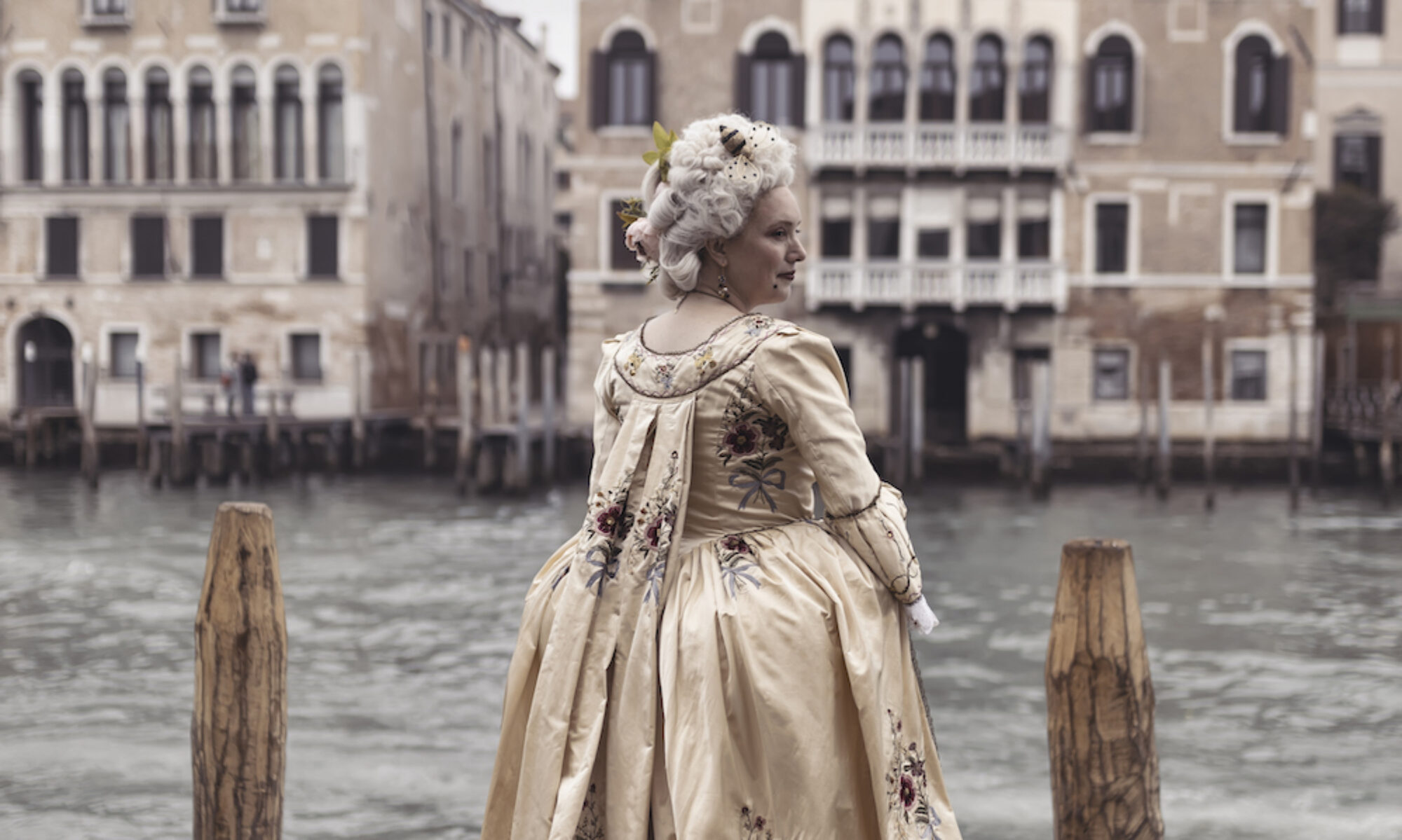
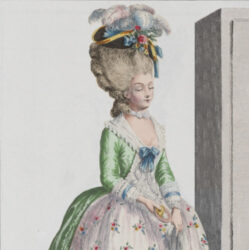

There’s been a LOT of discussion lately in historical costuming circles about the origins and eighteenth-century meanings of the chemise à la reine, a style of gown popular in the 1780s and 1790s. Having read a number of the academic sources on the style, I thought I could contribute to the discussion by outlining the scholarship on the subject.
First, let’s define the chemise à la reine. It actually went by a number of different names, including gaulle, robe en chemise, and then many variations like the chemise à la Floricourt or chemise à la Jesus. “Robe en chemise” is the phrase used most frequently in French fashion magazines of the period (Gallerie des Modes, Cabinet des Modes, Magasin des Modes, and Journal de la Mode et du Goût), and so the term I tend to use. The term “chemise à la reine” began to be used after the dress became associated with French Queen Marie-Antoinette when the famous portrait of her wearing the gown by Elisabeth Vigée-LeBrun was exhibited at the 1783 Paris Salon; this engendered widespread criticism based on the gown’s perceived informality.


