Costumes at the Chateau pt. 4: the white ruffly camisole & petticoat

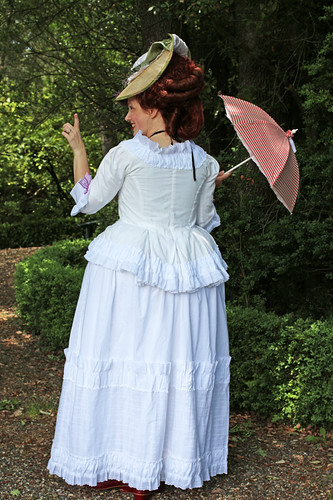
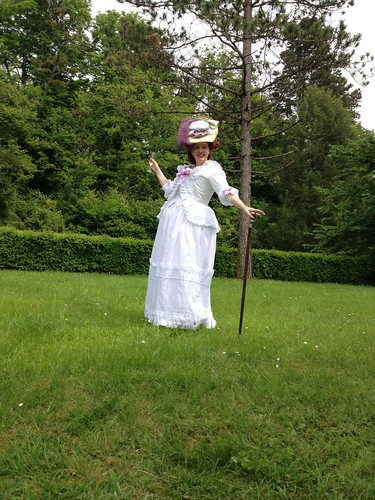
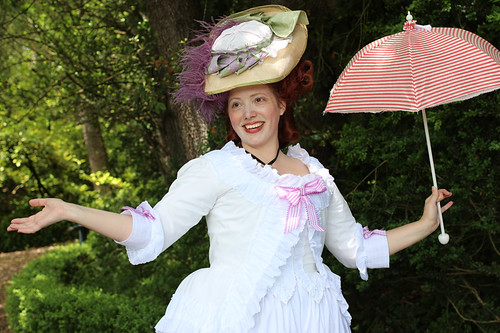
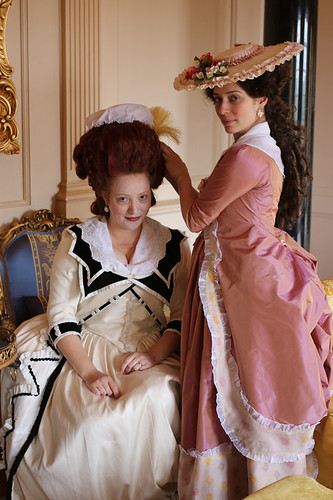
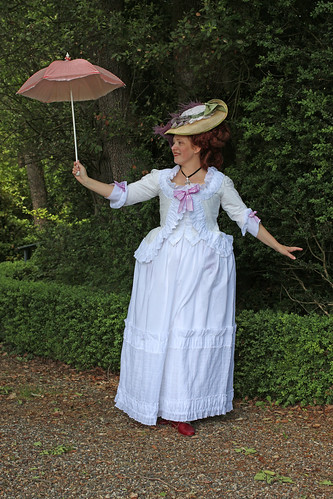
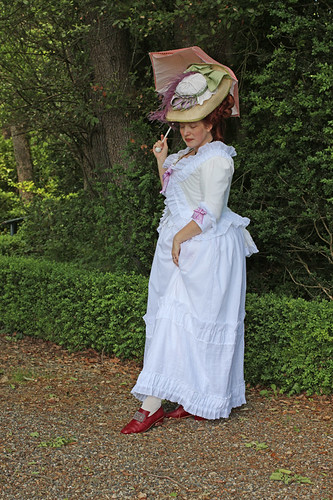
Last project to blog about from France!  For some reason this was the project I was most excited about making, and ended up loving the most while wearing — I think I just had a fixation on being WHITE and FROOFY and RUFFLY.  In all caps, natch.

I posted a bit about the early steps on the project here.  After that, it was all a matter of borrowing Trystan’s embroidery machine to sew the scalloped edges on the miles of windowpane ruffles.  I had a small crisis when I thought I’d run out of the windowpane before trimming the skirt, but managed to find a bit more of the fabric — I had to wing it on my machine for doing the scalloped edges, as I don’t have a fancy machine like Trystan, but it all worked out.  Minus the scallops, all of the rest is handsewn.

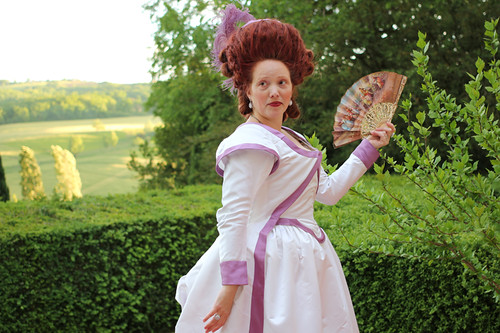
I added some striped lavender and white bows, from ribbon that’d been lurking in the stash for years, to the CF neckline and sleeves to bring some color to the ensemble.  And I wore it with the hat I originally made for Vaux le Vicomte, although I changed up the trimmings a bit to suit the lavender color scheme.

The one thing that’s bugging me is that, since I was worried about wearing stark white with my warm coloring, I used a slightly off-white lining for the jacket — and in these photos in the shade, it really changes the base color of the jacket.  I’m not positive it looks that off-white in regular lighting, but it’s annoying, as it’s made of the exact same fabric as the skirt!
Kendra

Kendra

Kendra

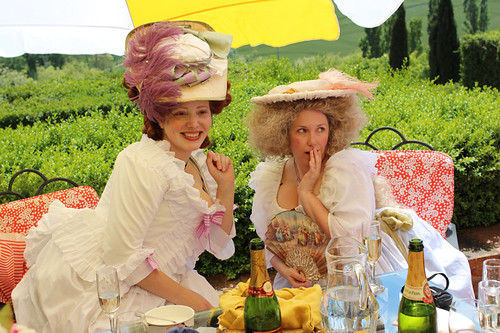
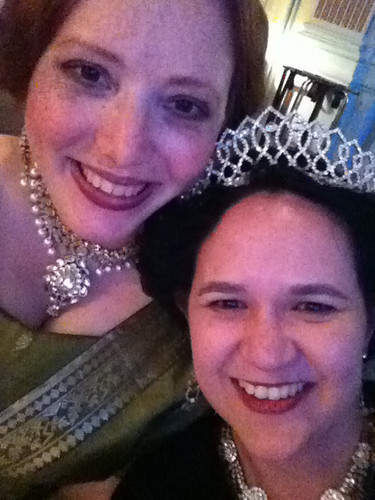
Mrs. Meringue & Mrs. Marshmallow: Kendra & Sarah

Kendra

Speaking of Wigs…

I still have at least two more posts to write about France, so I really should get busy!  And speaking of wigs, I wanted to post about the wig I made for France.

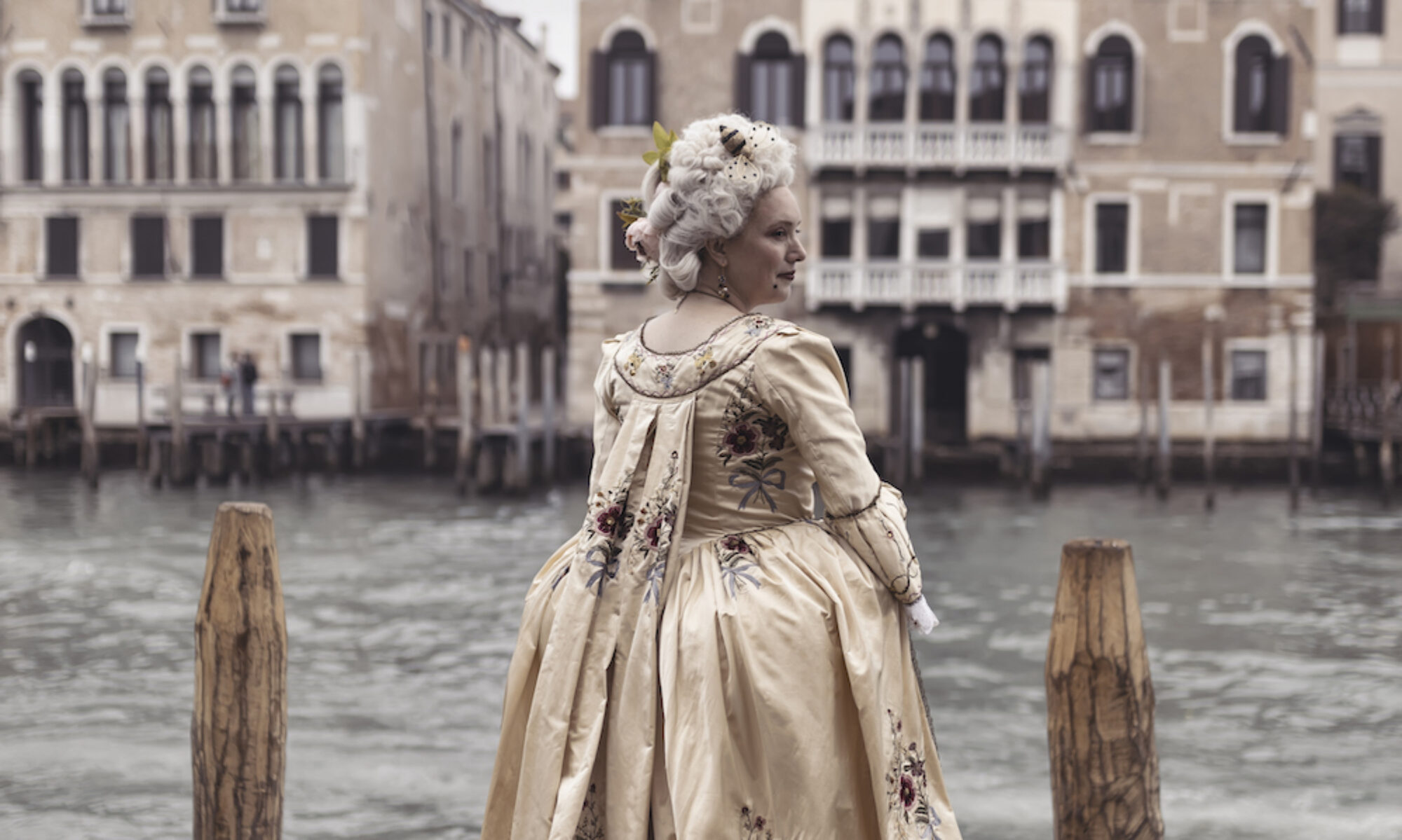
Luckily, somehow, all of the projects to which I was drawn were right around 1780, so that made it easy — one wig to rule them all!  I did contemplate making a grey wig for a more historically accurate look, but realized that a big trip like this wasn’t the time to take a risk — if I was going to have only one wig, I wanted to know the color would work on me.

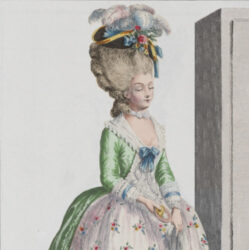
Here’s my inspiration board, which I had up while I was making the wig:

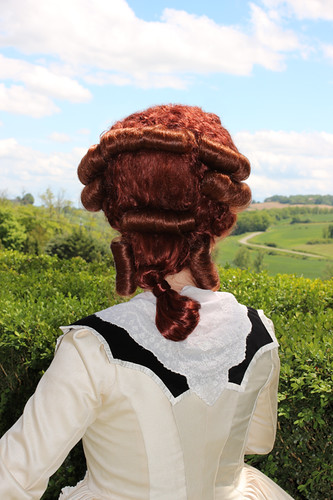
My first try needed rework, which seems to always happen (yes, that advice is going in the book!), as it was TWICE as high as the final version.  I almost went with it, then reminded myself that that wasn’t the era I was going for.  Here’s how the wig turned out:

I have a vintage 1960s hatbox that I use for my wigs when I travel.  The wig block never fits, so I stuff the head portion of the wig with plastic bags or newspaper or whatever is on hand, and if the wig isn’t as tall as the box, I do the same with any empty space.  This wig was wide enough that I had to take off the rolls to pack it, but part of my plan was that I could move the rolls around for different looks, so that was fine.  The other thing I planned was different ways to style the chignon (the back hair) and various hair accessories, to mix things up… didn’t want to get bored of wearing the same wig over and over!

Here’s the many ways I wore it:

First day with redingote, no hair accessories finished so nada, cadogan in back:

Kendra

Kendra

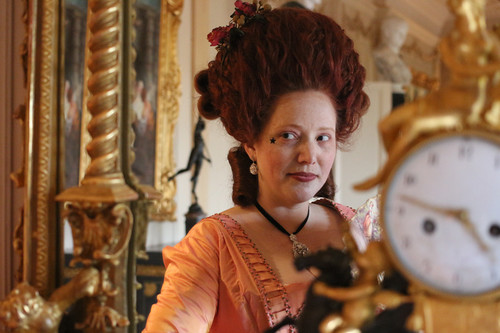
Evening look, with fake flowers pilfered from my room at the château (and returned), chignon looped up:

Kendra

Kendra

With purple ribbon and feather:

Kendra

With ridiculous hat — I love the “floating hat” you get in this era!

Kendra

With an organdy pouf, feather spray, and brooch for redingote rewears:

Kendra & Leia

The rolls were looking a little shabby by the end of the trip (note to self, fix those up before CoCo!) but otherwise the thing made it through the whole trip!

18th Century Hair & Wig Styling – The Book!

It’s really really happening — the 18th Century Hair & Wig Styling:  History & Step-by-Step Techniques book project is really starting to take shape!  About half of the text is written, all of the historical images have been sourced, and I’m starting to line up models and buy supplies.

Here’s the blurb I’ve written up that summarizes the project:

18th Century Hair & Wig Styling: History & Step-by-Step Techniques is a book that combines meticulous research with easy to follow instructions that will help you create historically accurate hairstyles of the 18th century.  The book includes a detailed history of men’s and women’s hair from 1700 to 1799:  which styles were worn when, as well as how hair and wigs were styled.  It provides practical techniques for styling hair and wigs that will be useful to anyone who wants to learn more about historical hairstyling, from beginners to advanced users.  Step-by-step instructions show how to create 25 individual hairstyles — 22 for women, and 3 for men — that span the century, and suggestions are included for ways to vary the different styles.

The historical overview provides equal, in-depth coverage of men’s and women’s hairstyles and wigs from 1700 to 1799, focusing on France, Great Britain, and the American colonies/United States.  The techniques will similarly be useful for both men’s and women’s styles.  While a good deal of historical styling information is included, the emphasis is on modern methods and products that will achieve a historically accurate look.

This book is perfect for historical costumers and theater/film designers and craftspeople who want to create authentic-looking 18th century hairstyles and wigs.  It will also provide a solid foundation and fun jumping-off point for anyone who wants to create historically-influenced fantasy styles!

I’ll be posting lots of info here, but the best way to keep up to date on the project is to follow the Facebook page and website:

18th Century Hair & Wig Styling — website

18th Century Hair & Wig Styling — Facebook page

Please help me get the word out about the project and share these links!

A Call for Help

One of my best friends, Trystan, has just been diagnosed with breast cancer.

Many of you know Trystan — she’s a longtime member of the GBACG, teaches at Costume College, plays in the SCA, performs at Renaissance Faires.  Hopefully you’ve had a drink with her and had her make you crack up — it’s her specialty.  What you might not know about Trystan is that she’s ALWAYS there to help.  If you’re putting on a costume event and you need help setting it up or tearing it down (late at night when everyone’s exhausted), Trystan is there.  If you have a crazy costume idea and aren’t sure if you should go for it, Trystan will say “do eeet!” (hey, she’s the creator of the sushi Victorian dress!  she’s down with the crazy!).  She was a longtime board member, including president, of the GBACG, and personally created their first website way back in the dark days of the internet — you know, that site that is such a great resource, particularly the pattern review?  She was a major organizer of Costume Con 28 (San Jose).  A few years back she joined the SCA, and despite statements that she had too much on her plate, she’s now autocratted (ie organized) events, put on Collegium (their workshop series), become Arts & Sciences minister (the person who puts on competitions, classes, and more for medieval crafts, skills, & technologies), and is currently a Queen’s Artisan (where she is involved in a project to make “largesse,” or medieval reproduction items like costumes, bags, and more that are given as competition prizes and more — meaning she is spending her own time and money to make things for people she may not even know).  I have been with her at SCA events where we couldn’t figure out immediately where to pay our “site fee” (aka the entrance fee or event ticket).  While some of us grumbled, she personally set out to find where to pay since, as she put it, “I’m a supporter” — and truer words were never spoken.

Well, now she needs our support.  Trystan is a contract employee, and her husband is a freelancer, which means they have to buy private health insurance… which is sadly really expensive, not just on a monthly basis but also for co-pays for doctor’s appointments, prescriptions, and everything else.  So not only is she dealing with “OMG I HAVE BREAST CANCER,” she’s also dealing with “OMG HOW AM I GOING TO AFFORD ALL THIS?”  Oh, and since she’s a contractor, all the time she needs for surgeries and treatment will be unpaid.  Good times.

If you’ve met Trystan or in some way been supported by her, and you have a few dollars or a small amount of time to spare, please consider supporting her:  by donating a few dollars (seriously, $5 would be fabulous), looking over her list of other ways to support, or buying something from her costume garage sale.

Luckily, Trystan is a fighter, so I know she’s going to come through this.  But it’s going to be hard, and right now someone who has supported many of us needs our support.  I hope you can help — even if it’s just to let her know you’re thinking of her.

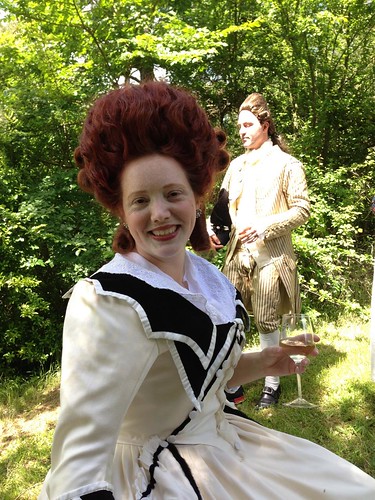
Closeup at dinner