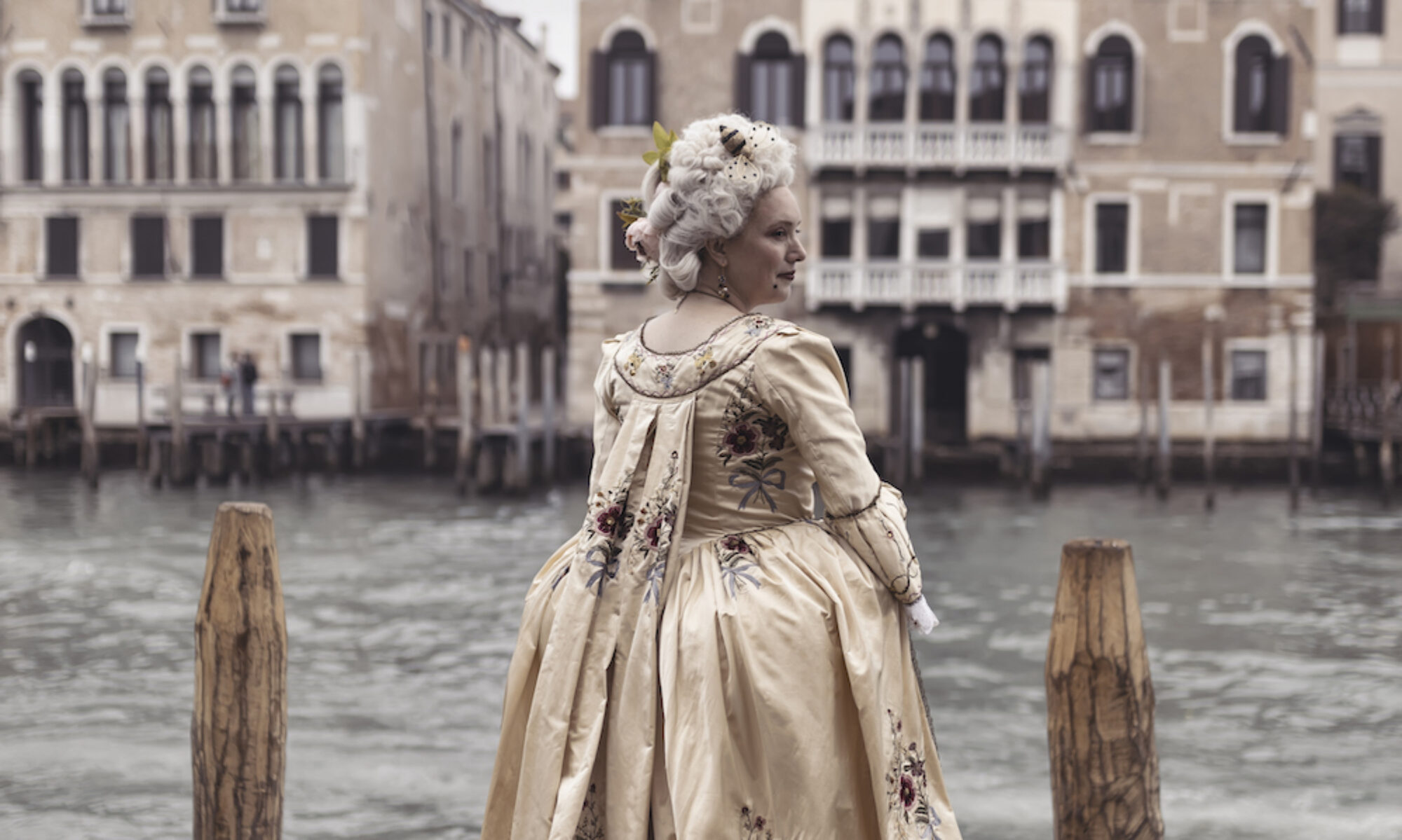
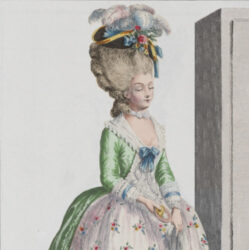
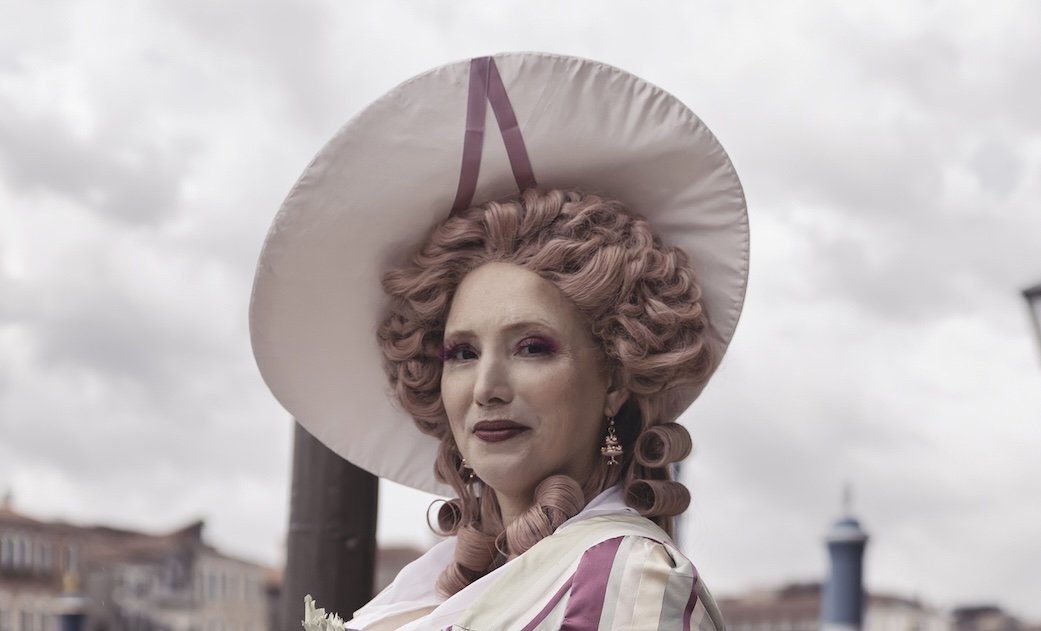
For years, I have been promising to teach online classes on 18th century wig styling. Well, I’ve finally gotten organized and created an online step-by-step tutorial for this specific style on Patreon at 18thCenturyWig! Historically accurate to the 1780s and first half of the 1790s, this “hedgehog” style features soft romantic curls, structured “hanging rolls,” and a cadogan knot in back. Videos demonstrate every step, from getting started through all the elements of styling. Many videos/steps are free to watch, and you can purchase paid videos individually or all together for $25.
I plan to create more tutorials — some just techniques, some full styles. What techniques and/or styles would you like to see in future video tutorials?
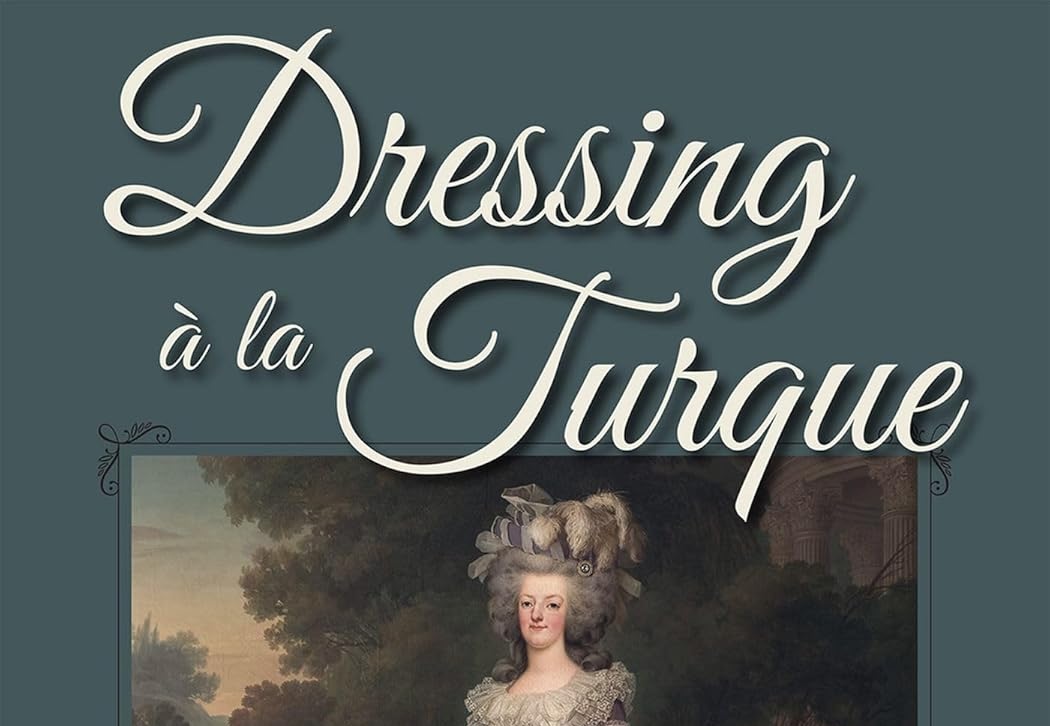
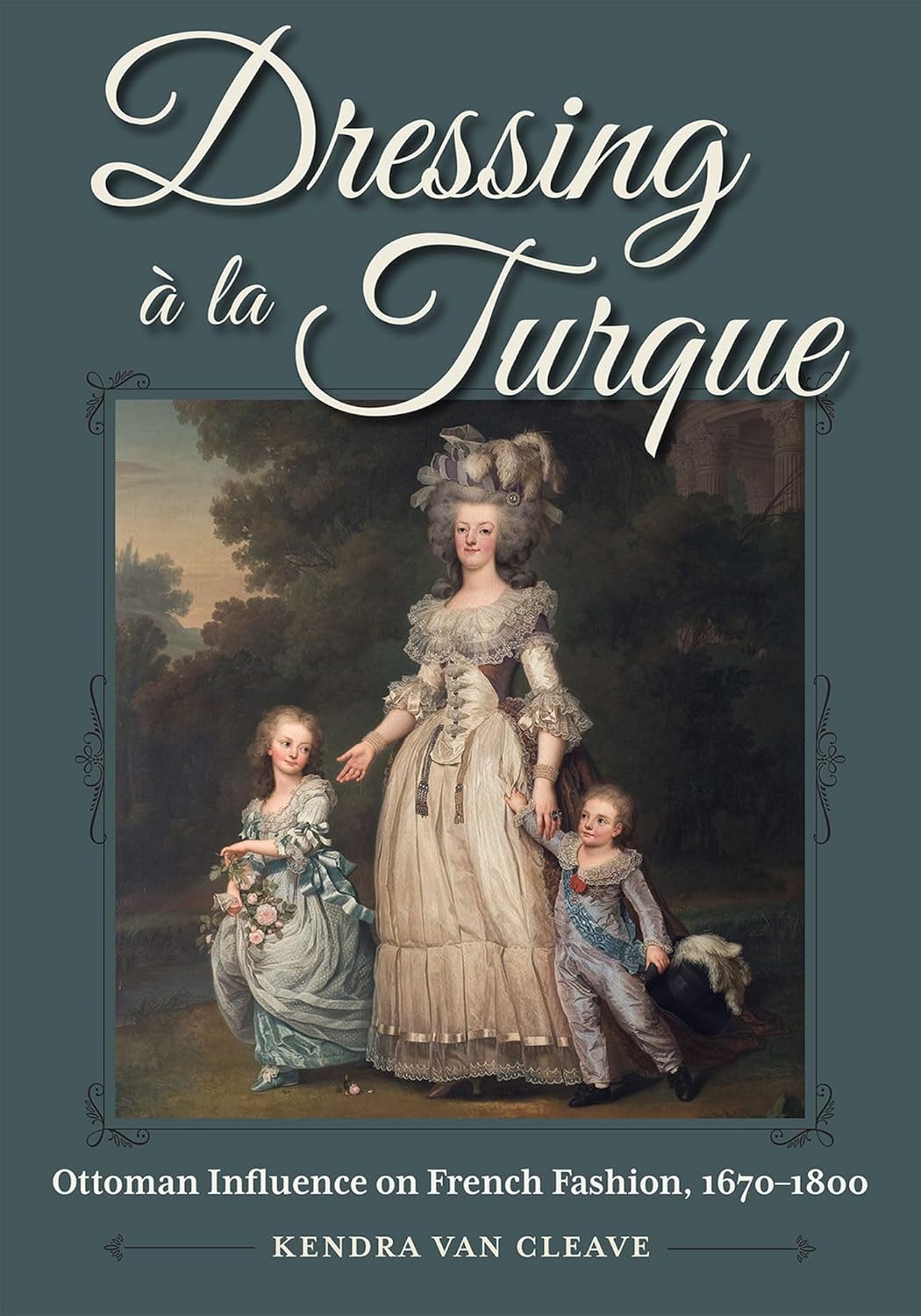
In 2023, my first academic book was published by Kent State University Press: “Dressing à la Turque: Ottoman Influence on French Fashion, 1670-1800.” It’s the culmination of at least a decade of research into the influence of Turkish dress on Western, and it also provides lots of information on other style trends of the century. You can purchase it on Amazon (print or digital) or any other major bookseller.
Here’s the summary:
“While French fashion has historically set the bar across the Western world, the cultural influences that inspired it are often obscured. Dressing à la Turque examines the theatrical depictions of Ottoman costumes, or Turkish dress, and demonstrates the French fascination for this foreign culture and its clothing. The impact, however, went far beyond costumes worn for art and theater, as Ottoman-inspired fashions became the most prominent and popular themes in French women’s fashion throughout the 18th century.
The newly invented fashion press used Ottoman-inspired styles to reconcile fashion consumption with Enlightenment dress reforms. At the same time, Turkish-inspired fashions were increasingly associated with long-criticized ideas about luxury, stereotypes about the connection between a woman’s interest in fashion and “lascivious” behavior, and French perceptions of the Ottoman Empire. This backlash is epitomized by the public criticism of Queen Marie-Antoinette, who popularized Turkish-inspired fashion, embraced a lifestyle of excess, and is still remembered for her singular sense of style.
Kendra Van Cleave includes numerous detailed images and dress patterns, enhancing her rich discussion of French styles during this important era.”
When I talk about the 18th Century Hair & Wig Styling book, a lot of people tell me, “Oh, I could never make my OWN 18th century-style wigs!” But you can, because I can! I’m not a professional hair stylist, wig maker, or wig stylist. I spent years experimenting with different techniques on my own hair and wigs, and through trial, error, research, and a few helpful pointers from others, I discovered how to reproduce the looks of the 18th century. If I can do it, so can you!
Need proof? Here’s some of my own 18th century hairstyling/wig-styling journey:
2004: My first attempt at a “hedgehog,” the bushy 1780s style. I curled and ratted my own hair and lived to regret it.2005: I really didn’t know what to do for earlier styles, so I curled my hair and put it in a loose bun.2006: I’d made my first Super Historically Accurate gown but wasn’t sure what to do about my hair, so I went with up in front, ringlets in back.2008: high 1770s wig! I used a stuffed fabric shape for the height, & it slowly collapsed over the course of the day.2008: My friend Linda suggested I build a cage of wire mesh. It worked! It wasn’t perfect, but I was excited.2009: I was still figuring out how to not look like Marge Simpson.2010: I’d gotten the frizzy 1780s wig looking good in front…2010: but I still didn’t know how to style the back correctly.2011: I learned what happens when you wear a tall wig too far back on your head: HEADACHE.2011: I was working out what exactly the back should look like, and adapting my friend Judy’s technique for creating perfect hair rolls with glue.2011: I was getting better shapes, and had figured out what the back should look like — but I hadn’t figured out how to make it look perfect.2012: I had the glued hair rolls down perfect, even if I hadn’t discovered lace front wigs yet!2013: My overall shapes were better, and this wig taught me what I needed to do to make the back look historically accurate.2013: I was also enjoying the fact that I could wear the same wig and change up the accessories to go with different costumes.2013: I was figuring out earlier styles than the ones I’d been doing so far, and again experimenting with techniques.2014: I wrote a book! I taught myself SO much about how to make 18th century wigs look right & be convenient to make & wear.2014: I really perfected the back elements of the wig…2014: and how to get HEIGHT!
What was the result of all of this trial, error, and research? Wigs that I can make days/weeks/months before the event, so I’m not exhausted on the day of by trying to style my own hair (yes, the book shows you how to do these styles using your own hair, but that’s not my own preference). Wigs that have all the design elements that make them look historically accurate to the specific periods of the 18th century, but are made taking advantage of modern supplies that can be purchased by regular people at affordable prices, and techniques that work for non-professionals (me!).
1730s lace front1770s with my own hair worked into the front1780s lace front1760s in magenta for carnival1780s crazy colors/lace front1770s matching twins/lace front1780s Marie Antoinette lace front1770s
Many of you know that I wrote a book on eighteenth century hair and wig styling called 18th Century Hair & Wig Styling book. It’s been out of print for several years, and I am finally getting organized to do a second print run… with a discounted presale!
What’s in the book? There’s three sections:
1. Historical overview (including style details & changes over time)
2. Practical techniques (making hairpieces, working with fake hair)
3. Step-by-step instructions for 25 specific hair/wig styles
Here’s the table of contents
And here’s a preview of several pages from the book:
Reviews have been overwhelmingly positive! For anyone who does 18th century costuming specifically, this book will be very helpful at understanding which style details go with which era, as well as how to reproduce them using modern, practical techniques. You can use the techniques with your own hair, hairpieces, and wigs. It would also be useful for anyone who would like to know more about working with hairpieces and wigs of any era for costuming purposes.
You can preorder the books (which will ship in March) for a discounted price of $34.99 (regular price is $50), plus $10 off international shipping.
In future posts, I’ll be highlighting some aspects of the book, as well as some reader results.
I and a group of friends had planned to go to Versailles for their Napoleonic event at the Grand Trianon in early September, but many of us (including myself) canceled due to COVID-19 worries. So, we decided we’d do something more local, renting a historic house on the Northern California coast, and I found myself in need of a Regency wardrobe. Now, I don’t get along well with Regency. It doesn’t tend to be terribly flattering on my curvy shape, and I don’t find it a terribly interesting era to research and make. However, I DO like (not love) 1790s, as it’s an extension of my beloved eighteenth century. I had already decided to do a late 1790s gown for the Napoleonic event, and decided to keep with that period (1796-1800ish) for my entire wardrobe.